Showing posts with label writing. Show all posts

Tuesday, May 21, 2013

Dr. Bird's Advice for Debut Author Readings: WHERE TO BEGIN?

I recently began doing events to promote my novel, Dr. Bird's Advice for Sad Poets, and found that the process of preparing for readings felt very similar to teaching literature as a college adjunct. Basically: I arrange some introductory comments to set context, concoct some comments about the main character, pick a passage to read, practice some voices for dialogue, etc. It seems pretty natural, and yet it's not.
Not everyone is a teacher.
Not everyone is comfortable with reading, speaking, or performing in front of crowds.
Not everyone has written the same kind of book.
Not everyone has been going to poetry and fiction readings since they were twelve.
So, at the risk of increasing my tendancy towards know-it-all-ism, and even mansplaining some things, I have composed a few posts on promoting your book in public. I've broken this into 4 posts because I tend to be...wordy. Links to each topic are featured at the end of each post.
Also, please put suggestions or thoughts or experiences in the comments section. Ask follow up questions and I'll incorporate stuff into the main post if it's super-helpful!

1) WHERE TO BEGIN? A reading is a performance in many ways, but it's never successful if you get up, read, then sit down. Even if you're reading the opening pages of your novel, where all readers begin on equal footing, you should give the readers some sense of what they're about to hear. Consider it this way: in a store or online, people might read the jacket copy before page 1, so at a reading the very basic thing you can do to begin is:
  • Be your own jacket copy! 
    • Here's a simple example of what I might say: "Good evening! Thanks so much for coming out to celebrate reading and books and laughter and more serious things. For those of you unfamiliar with Dr. Bird's Advice for Sad Poets, it's the story of a teenager who suffers from anxiety and depression and tries to manage his mental health by reciting Walt Whitman poems and talking to an imaginary pigeon." That plus a couple of lines to give a sense of the key characters is often enough for any audience. 
    • It's basically: Hi, here's my pitch. Wanna listen? Great!
  • In addition to being my own jacket copy, I like to discuss what precisely inspired the book. (Usually someone asks this question if you don't discuss it up front, so you should have an answer in mind anyway.) You don't have to rewind the story of your life to second grade and talk for 15 minutes. 
    • I often start with "I wanted to write a book about a depressed teenager that was funny but also respectful. In many ways, the book is emotionally autobiographical even though the plot isn't. I never liked Whitman as a teenager nor did I hug trees or talk to an imaginary pigeon. But the anxiety is what binds James and I together."
    • I also have a different origin story that involves another book I started to write with friend and author Matthew Quick. He's the reason I wrote this book in the first place, but he and I also openly discuss mental health issues in our work, so it's an authentic way to show 1) writers aren't totally isolated from each other, 2) I have a serious issue and personal investment with this book, and 3) I give a shout out to a guy who's been supportive to me since the day we met. 
      • You should always give shout outs at readings! People are going to ask you who you read anyway, why not support your friends?
    • If the inspiration of your book feels lame to you, don't fake it! Don't use it! Discuss what excites you! Discuss what inspired you! Discuss what expresses the YOU of YOU! 
      • Who do you hope to connect to with this book? 
      • How do you relate to other writers? To books? 
      • When did you know you were a writer? 
      • Is this the first book you wrote or, more likely, the second/third/fourth...? 
      • Why is this the book only you could have written?
      • Is some of this sounding familiar?
  • Matt Quick and I did an event for the Newburyport Literary Festival at the end of April. We spoke to about 200 people for an hour (including a long Q&A). We discussed our friendship, writing relationship, and our struggles with mental health. Neither of us read from our books. Both of us sold out of books. Not everyone can do this, or has the material to do this, but if you can give your audience a reason to care about you as a writer (not necessarily as a person, but as a writer-who-is-human), then you will connect and succeed. 
  • Maybe you don't want to share personal information—that's ok! I stress that your story, your persona, is what will energize people. Who are you? How do you create stories from thin air? It's a magical skill to non-writers. It doesn't have to be emotionally raw, it can be fun or serious & still authentically YOU. 
Next: HOW LONG DO I READ FOR?

Monday, April 8, 2013

The Philadelphia Inquirer writes about Dr. Bird, mental health, and friendship

The Philadelphia Inquirer ran a great article by Kathy Boccella today. It focuses on what's truly important in terms of Dr. Bird's Advice for Sad Poets. Check it out!

YAWP!

Before the enormous success of Silver Linings Playbook, both the book and the film, there was a young-adult novel called MonkeyShark.
Don't expect a movie adaptation starring Bradley Cooper.
But the poignant backstory of MonkeyShark and its protagonists - a redemptive tango of overcoming mental illness and miscommunication, surrendering old dreams and realizing new ones - would be a familiar plot to anyone who saw last year's Hollywood blockbuster starring Academy Award-winner Jennifer Lawrence.
The book was a collaboration between Silver Linings' author, Matthew Quick, and his friend Evan Roskos. Just four years ago, they were two struggling South Jersey writers who met every Friday morning at a Collingswood coffee shop, working on their hoped-for bestseller.
MonkeyShark would not be it.


Read more!

Tuesday, March 5, 2013

One of a million thank yous


Hello all! It's a big day here at Chateau Roskos and I'm glad so many of you have the book or will have it soon.

DR BIRD'S ADVICE FOR SAD POETS is about tons of things, some small and funny, some big and serious. I've written elsewhere about what this book means to me and what it might mean to others. (Just yesterday, in fact, I got an email from a reader who felt a strong connection to some of James's familiar thoughts and emotions. The reader was thanking me, but I have to thank them just as much.)

I'll never be mad if what I write doesn't speak to you; still, I hope that even if you don't plan to read it, you share the book with someone who might find something important in the story.

Thanks to everyone!

Dr. Bird is full of big ideas about Walt Whitman.

Monday, January 21, 2013

On Being 35

Don DeLillo published his first novel in 1971. He was 34. His publisher was Houghton Mifflin.

Today I'm 35. In 43 days, Dr. Bird's Advice for Sad Poets will be published by Houghton Mifflin.

Don DeLillo is my favorite author. I'm never good at explaining why without sounding pedantic and hyper. Maybe it's like people who love The Grateful Dead. Hard to explain because it's the concert experience as much as, or more than, the music. For me, DeLillo writes sentences that fit neatly into neat crevices of my brain.

I do not write like him, though I admire his scope, his sentences, his sensibility.

I think of him today to help remember that there is no need to obsess over the age at which I achieved success, but simply celebrate that I did achieve it. Writing is difficult. Getting published is too. Seeing a book enter the world deserves celebration. While I once thought I could publish a novel in college or in my twenties, I followed a different course of action.

I didn't know how to write a good novel back then anyway, though I could read and analyze great ones easily.

Here's hoping my career lasts as long as DeLillo's has and that I gather up a few superfans along the way.
New covers for DeLillo's novels for Picador

Saturday, December 10, 2011

WHEN THE ONLY LIGHT IS FIRE by Saeed Jones


First things first: you should buy this book:

If you are anti-Amazon, it's also available from Alibris or from Sibling Rivalry Press.

Second things second: you should buy this book because buying books of poetry is not difficult, helps the universal purpose of poetry (to communicate), and also keeps the economy healthy. Thus, it's patriotic.

Third things third: you should encourage other people to buy this book because then you can discuss the poems. It will give you something important to talk about aside from your pointless existences or the new ailments and sufferings of your life. 

Fourth things fourth: While you can read the rest of this post without reading Saeed Jones's book, the post will make a little more sense if you've read the poems. Plus, I can't just quote the whole damn thing here; it wouldn't be fair.

"I've heard that some men can survive / on dust mites alone for weeks at a time. // There's a magnifying glass on the night stand, / in case it comes to that." -- "Sleeping Arrangement"

Now, to the point:

I have a general issue with poetry -- I don't think it's a waste of time and ink; that's not a valid critique generally or in this case, even if I believe that the role of poetry has been marginalized in our visual- and narrative-demanding culture. But I tend to see poetry as highly personal and highly personal things like poetry and song lyrics often need to be decoded in ways that cannot always be done successfully, especially if the poet would prefer NOT to let us in. Sylvia Plath, for instance, writes poems that are highly coded. She wants us to experience the poems as poems, not as cliched windows into her soul. "Daddy" has a beautiful rhythm and sound, and it rises to a climax that can be felt when she closes with "I'm through." There's no denying the aesthetic beauty of that poem. 

But once you know that Plath didn't hate her father, that her father taught German at a university, that her father wasn't a Nazi, etc, "Daddy" takes on a new and more complex meaning outside of how beautiful it sounds. No longer is this a "poem about daddy issues." It's now a poem about grief and loss. And grief is so much more profound (in my opinion). How would we know that meaning aside from decoding things? 

Basically, I cannot see a work outside of its time and place or disconnected from its author. This doesn't mean I must know an author's biography to enjoy the beauty of language; it just means that I tend to look for these things to enhance my understanding of the poetry as whole. That jerk TS Eliot would of course scoff and call me a ninny. Fair enough, but he's dead and also willingly spent time with Ezra Pound so I don't really have to worry about him. 
TS Eliot: poet, jerk.


And yet, even if I look at WHEN THE ONLY LIGHT AS FIRE as simply a text, in the way that total dick T.S. Eliot would suggest, I don't miss out on the emotional power of a line like: "And if I ever strangled sparrows / it was only because I dreamed / of better songs." 

Sure I can celebrate that line metrically, but there's a human voice there, a human mind. A mind that is not mine, does not have my background, and yet has succeeded in communicating across the differences of race and class and age to punch me in the gut. I don't need to be Jones or to know him intimately to know that he is a specific, profound human being and that the speaker of this poem (Saeed? Someone else?) has felt something concentrated, unique, and real. TS Eliot wasn't denying that emotions needed to be at the center of poems; it's just the natural outcome of trying to experience art through only an aesthetic lens. Eliot would suggest that there are no barriers between a reader and a piece of art as long as the reader is looking at things aesthetically. I can't know the artist and even if I did, I might not know the artwork any better if armed with knowledge. So, I get what Eliot is saying. I just don't like to think that art lacks blood and fiery synapses.

There are, of course, specific barriers between me and Saeed Jones. I'm a white guy from New Jersey. Jones is an African American born in Tennessee, raised in Texas, who lives in New York City. I'm straight, he's gay. I'm this, he's that. We both wear shoes, we both have eyes, we both write. To paraphrase Tim O'Brien: everything is true if you generalize enough.

Saeed Jones: poet, not a jerk.
But, really, none of this is a true barrier unless I make it one. It would be easy for me as a straight white guy to only read poetry by straight white poets. From New Jersey. Easy, and perhaps not nearly as dull as one might expect. (Seriously, BJ Ward is an excellent poet. So is William Carlos Williams.) But  those labels on bookstore shelves or on Amazon ("Gay/Lesbian Literature" or "Gay/Lesbian Poetry") signal things that can act as barriers even though they do not have to.

Put simply, I don't need to be a gay black man to like Saeed Jones poetry. Just like I don't need to be a British actor to like Shakespeare or a baseball player to root for the Phillies. And yet, the labels can make it easy for me to dismiss a text. 

Think of it outside of poetry for a second. If my wife tells my she wants to see a film that's called a Romantic Comedy I might balk at seeing the film with her. I don't think I need to belabor the point or even suggest certain movies that are "romantic comedies" and yet don't feel like romantic comedies, right? 

Right. So as a straight guy I can read these poems. And as a great poet, Saeed can write about anything he wants without losing the power that he has as a great poet -- the power to wrestle/shape/control/unleash words. He does not have to (and does not) write only about the topics determined by labels. 

Because the labels are guides but they are not the writer. Sure, some writers might be happy to hang onto a label and give their readers exactly what they expect -- that is essentially how genre fiction works, how erotica, thrillers, action movies work. But if we assume that all labeled things are only what their label says, then wouldn't we be seeing the entire world as genre'd? And then we'd see less and less of the world.

Consider: 
"I don't read young adult books."
"I don't read memoirs."
"I don't read books with male/female narrators."
"I don't read gay or lesbian poetry."
"I don't read literary fiction."
"I don't read fantasy novels."
"I don't read."

I can read this:
"After his gasp and god damn / grunt, after his zipper closes its teeth, his tongue leaves / its shadows, leaves me / alone"

and feel a certain kind of loneliness. I don't need to be Jones or the speaker to know that feeling. I don't need to have ever had that loneliness to know that loneliness.

Isn't that what self-professed book nerds love? To feel things we've never felt? May never feel? Isn't that how stories and poems get all wrapped up in the concepts of compassion and empathy? 

True, the labels we are given or adopt (or both) can help draw in people who may understand us before we even speak, who already have expectations about us. Labels help filter the world so if we want to read something by a blonde Latino writer of High Fantasy Novels narrated by dragons, we can find such a thing. But those labels can be trouble -- they can give people excuses not to spend time with our words when our words might be exactly what they need. 

How lonely is that feeling? 

See the world in genres then start cutting out entire genres. See what you're left with: flavorless mush. Worse, the inability to connect to others about stories. 

Worse worse: you write blog posts condemning the very thing you've been guilty of a thousand times; but hopefully you (I) will change.

Monday, October 31, 2011

Why I don't publish negative reviews online....

I have a guest post over at Alice Ozma's blog that you should check out! Alice is a former literature student of mine whose book The Reading Promise can be found, amongst other places, here.


Tuesday, October 11, 2011

Why Writers Act Rudely (or: The Interruptor)

Last week I was in my local writing hangout/coffeeshop, enjoying my day. The friendly barista*, whom I hadn't seen in a week or two, asked for an update about my writing. I happily gave her a brief update, mainly because I was (am!) still buzzed about getting a literary agent. I felt this was a reasonable victory worth bragging about. Note, though, that I did not just walk up to her and say "Hey, I got a literary agent! Make me a drink, coffee-wench!" While that may have been hilarious, it is not exactly the most polite way to announce good news.**

After answering a few of her questions about agent-searching and why my agent is so awesome, I asked how she had been and how her work was going (she is a film editor). But rather than discuss that work, she began to describe how a recent desire to write a hard sci-fi novel had overcome her. As a writer, but also someone who had read plenty of sci-fi as a teenager, I was intrigued. She answered my questions with the level of detail I enjoy in conversations like these -- i.e., enough to get the point and share in the enthusiasm, but not enough to make me wish I had somewhere else to be. I also liked hearing her describe the precise kind of sci-fi she enjoyed reading because she does not seem like someone who would prefer epic sci-fi novels. So, a fun discussion was being had.
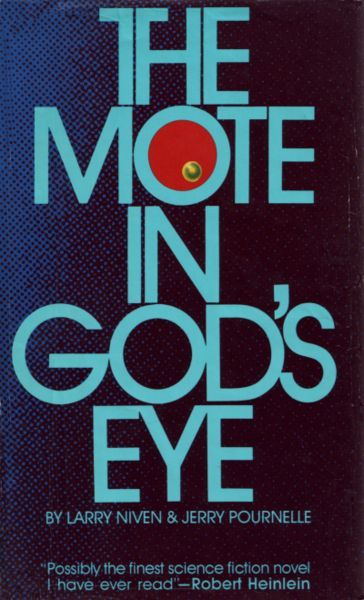
Teenage-Evan's sci-fi book of choice.

As the barista spoke to me, a guy at a nearby table kept turning around and listening and then finally got up, stood next to us, and interrupted: "I'm writing a novel."

The friendly barista -- mid-sentence -- gave him a quick glance and finished her thought. I shot him a glance but did not engage him either.

People -- especially people who write or paint or take photographs -- love to talk about their work. And writers love to know that there are other writers out there. (It's probably not just those with artistic temperaments: parents love to talk about their kids; sports fans love to talk about their teams -- both could easily interrupt conversations whenever they sense room to promote their preferences).

Basically, there's always an urge to connect; but some of us project that urge too forcefully. Too desperately, even.

Consider:

"My child also has a wonderful vocabulary."
"I have always wanted to write a novel."
"I like to take pictures, too."
"I really enjoy films."
"My band is working on our first album with the bassist from Creed."
Creed bassist Brian Marshall "also co-owns a bed and breakfast called Mango Moon in Costa Rica"
where he makes this face 24/7.

There's something about that emphasis -- it's not always in the same part of the sentence -- but it carries with it a desperate need to connect to someone with similar projects/goals and, just slightly, suggests a superiority.

"I'm writing a novel."
is easily meant to be:
"You aren't the only one writing a novel."

The interruptor quickly returned to his table, where he said to his friend, intentionally loud, "I guess no one wants to hear about my book." His friend replied: "Shake it off, man. It's not a big deal."

His friend was right -- it wasn't a big deal. He wasn't actually being ignored because we had no interest in hearing about his book. We just didn't have an interest at that moment. His request to be noticed caused him to forget basic social etiquette. Seems pretty obvious, right?

The real point here, is, that I totally get it. I understand the feeling this guy had. Writers spend lots of time in their heads, speaking in random voices, exploring moral and ethical quandaries, pretending, etc. It's quite fun, but also lonely and usually results in lots of rejection. It's easy to say that writers (more than musicians, perhaps less than painters) spend a lot of time alone.

But it's not simply the loneliness that causes us to have the urge to tell everyone that we're writers -- I think it's the rejections that turns the urge into an act. As a writer I spend time writing and then I have to spend twice as much time asking people to read what I wrote. Sure, Facebook and Twitter let me reach more people, but it also lets me know how many people just ignore the request (oh the lack of comments and likes! Oh the lack of shared links!) And when I fail to get people interested, I feel like I've failed as a writer. Really, though, I've done nothing wrong as a writer; I'm just expecting too much (and, perhaps, failing as a self-promoter).

So, this interrupter just wanted someone -- particularly two strangers -- to be interested. And he figured we would be interested because we were talking about writing. And as someone who queried agents for two years and received over 160 rejections and non-responses for 2 projects -- I know that rejection can make one look for acceptance in any place at any time -- even in the middle of someone else's conversation.

I considered going over to the guy and asking him about his book. I also considered how I might best explain why he had been so easily ignored. Just a little advice from someone who knew what he was feeling but also knew that writers are a crotchety, gossipy bunch ready to turn someone's faux pas into a short story or, worse, a blog topic.

But he left with his friend before I decided whether I should be the holier-than-thou author with no interest, the guy with social advice, or the nice writer interested in another writer's work. I hope he went home to write because it's the only time and place to be somewhat happy between all the rejections big and small.