Showing posts with label music. Show all posts

Monday, August 3, 2015

Montage of Heck: the critically acclaimed documentary that’s not a documentary at all.

tl;dr — wrote this when the doc first premiered on HBO, but didn’t post. The portrait of Cobain offered is simplistic and factually questionable; plus the director made it clear he didn’t care about truth, just the art. When Courtney Love takes credit for causing Cobain’s suicide attempt and successful suicide, it’s almost laughable. 
For a more fascinating, nuanced picture of Cobain as a person and as a part of the Seattle music context (both pre- and post-MTV explosion) I HIGHLY HIGHLY HIGHLY recommend Everybody Loves our Town: An Oral History of Grunge by Mark Yarm (on tumblr: grungebook). It covers more than just Nirvana, but obvious they are a crucial part of the history of that city’s rise to music prominence. (See chapters 26 & 32, though even more in that book is essential reading.)


When Brett Morgan’s documentary skipped over Nirvana’s jump from SubPop (for whom they recorded Bleach) to Geffen, I realized I wasn’t going to get what I thought from Montage of Heck. Up until that point I had held out hope that a nuanced picture of Kurt Cobain, the person, would develop. Part of understanding him, in my opinion, involves his experience as a businessman. His relationship to the band members, the managers, the record labels, the club owners, and other musicians all matters. Instead, the focus remains on Cobain’s 2 important romantic relationships, the latter shown through long home video segments. 
Put plainly, Montage of Heck ends up not going off the rails, but revealing that it was not on any rails to begin with
For a documentary intent on showing Cobain as ambitious but tortured by mental and physical illness (stomach issues & eventual heroin use), this film fails to explore the ambition and fails to do more than provide his parents’ vague comments about his childhood hyper activity troublesome behavior, which led to him being shuffled around between family members. 
The band interviews that are shown (from after the band makes it big) offer a relatively tame image of a bored, disaffected singer uninterested in anything except being on stage. But is that an act or real or both? In an article for MTV.com, Brenna Elrich reports that Cobain apparently "talked for hours with journalists even though he said he hated the press”. The documentary shows him quipping a few grumpy one-liners while Novolselic and Grohl handle things with the professional-though-dismissive manner we’d expect from a band that consistently appeased the very media moguls that irked them (i.e., they hate MTV but have multiple MTV performances, videos, interviews and the seemingly timeless UnPlugged performance). While there might not be footage of those chatty interviews, there must be some journalists somewhere willing to talk about them, right? If the documentary not only shows Cobain on camera and grumpy but also provides info about how Cobain might be coaxed into longer conversations, then maybe I’d get a sense of a complex person. One who loves the spotlight or loves talking even if the overwhelming pressure drains him. The doc does stress that Cobain was a hyper kid, so the gloomy adult musician seems like a sad deterioration, but the presentation is very basic “disaffected youth starts band, lucks into fame.” Who was able to get him to perk up? His girlfriend Tracy Marander basically supported him for a year before he moved on and I found that segment compelling (check the link for brief write up of the actual mix tape Montage of Heck, created while Cobain lived with Marander).
I think there are two weaknesses at play: the documentary relies heavily on Cobain’s journals, some of which were already published back in 2002. There are plenty of shots of the pages, some of the pages even get animated by the filmmaker. It’s an interesting aesthetic element but feels like a flimsy Ken Burns-style gimmick. Using them isn’t a problem. Relying heavily on them is. 
The second weakness, and this one is why I think this is not so much a documentary as a montage (get it?!): a striking lack of perspective. 
Most of the things we hear are from his family—a reasonable and necessary and interesting contribution to any portrait of an artist—but where are the other artists? Where are the journalists? What about the music producers who worked with him and had to manage his moods and musical perfectionism? (Perfectionism and slackerism: Cobain reportedly threw together lyrics for some songs last minute, apparently not caring about meaning as much as sound. Meanwhile he labored over lyrics to other songs, apparently caring very much about the meaning.).
The absence of voices is obvious, loud, suggestive, but ultimately unexplained. While Morgan can be heard asking a few questions, a narrator might’ve helped fill in some gaps. 
Let’s consider some of the key absences, as I see them:
Buzz Osborne of The Melvins (aside from his “appearance” via a tape recorded conversation about why high school sucks). He wrote a great review of Montage of Heck which is worth reading even if you LIKE it because it points out why this film should not be used for the factual understanding.  From a Rolling Stone write up, Osborne says:
“Would they feel better if Kurt Cobain did 'fuck a fat retard.' Do they feel better now? Do they feel better if he actually was suicidal? That makes you feel better? None of that's true. I don’t think that's a good legacy for him to have out there. I know it's not true. It's that simple."Read more: h
Plus, Osborne has been critical of the cult of Cobain. Check out this telling, fantastic, and harsh quote from 2013: 
“People have said to me, which I think is crazy, ‘Do you ever get jealous that Kurt Cobain got fame and money?’,” says Osborne. “And I go, ‘Kurt Cobain is f—ing dead. Are you kidding? What are you talking about? You think I would trade places with a dead guy?’ Yeah, I wish I had been more famous, and had more money, and was dead. No, no, no. I win. I win. He doesn’t win. He loses. He’s a major loser. His f—ing loss. He left a baby at the mercy of that woman [Courtney Love]. And, it couldn’t be worse. There’s nothing good about any of that.” 
Kim Gordon of Sonic Youth, musician who encouraged Cobain & co. to move to a bigger label.
Pat Smear, who played guitar with Nirvana during the last six months and might have an interesting perspective on Cobain (especially seeing as Smear ends up in Grohl’s band Foo Fighters. Knowing Grohl’s opinions of Love, I suspect Smear would have loads of insight).
Where are the people who run SubPop? Where’s anyone from David Geffen? Where’s their co-manager Danny Goldberg?*
Dave Grohl’s input was apparently not sought until late in the filmmaking, though his perspective can be seen in the Foo Fighter’s documentary (if you can stomach such a thing**). 
When I consider that this documentary might be intended for people who were not aware of Cobain and Nirvana in the early 90s because of disinterest or simply because they were too young, then these missing voices are even more crucial to completing a portrait of Cobain. Watching home movies, looking at journal entries, and listening to Love or Cobain’s parents speak (with no counter-perspective in most cases so who can tell what’s valuable and what’s utter BS), is simply not a complete picture of Cobain as a person. Son and husband, check. Businessman? Musician? Friend? Enemy? 
I know I’m old but I’m also not impressed by a documentary that fails to explore outside perspectives along with Cobain’s own written thoughts. 
Which brings me to something I thought was very odd: 
Cobain’s suicide note. We don’t get to see it. 
I don’t want to hear Love read it. The movie fails to disentangle Love and Cobain for much of the last hour, so ending with her reading it (a recording which exists) would just be one Love-moment too many. But that note, that handwriting, that commentary needs to be included amongst all the scrawled documents that were used because it is his final statement. It is not a conclusion, it’s one of many things he said. Why are his journals more important than his suicide note? His journal are filled with all sorts of silly nonsensical things. I saw the phrase “abort christ” on screen a bunch of times. I saw his love notes. I saw band names, track lists, plans to practice, letters to band members. But I don’t get the suicide note? The last thing he wrote? I don’t get some way to see what he said after seeing all the other stuff? (And yes, I know that the letter can be found online. But if the documentary is meant to literally document Cobain, then the document matters.
Morgan says that there was no way to put a Hollywood ending on the documentary. But what he has done is failed to create any narrative whatsoever. Did he fail to ask the right questions, leading to subpar material? Did he fail to get access to people that might offer more nuance to Cobain the businessman or Cobain the musician who collaborated with a number of people (including Love on Hole’s album)? Did he simply try so hard to avoid repeating what other documentaries and books have covered about the band that he left out aspects of Cobain the person? I don’t know. 


In the end, my response here has more to do with the fact that Montage of Heck been so widely praised even though I see a documentary that fails at its core purpose and fails to add to the scholarship that already exists. If anything, I hope that people are inspired to read more about the Seattle music scene, to understand the context, to understand the way heroin played such a role in a number of musicians’ lives. (If you want a really stark anti-heroin story, it’s not Cobain. It’s Layne Staley, singer from Alice in Chains.) Since it’s meant to be the portrait of Cobain, seeing as Frances Bean gave such access to Cobain’s materials, I’d wished for more than a sketch.
*If I missed any of these people in the documentary, it’s likely because there’s no real attempt to identify places and people clearly. Dates are missing from the shows featured.
**I’m not a big fan of Grohl’s personality and behavior, though his drumming is stellar.

Thursday, July 30, 2015

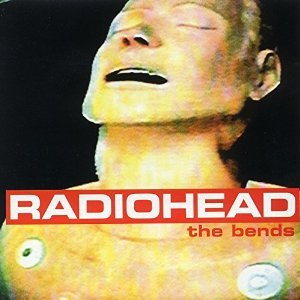
Radiohead Appreciation Post: The Bends

“You can force it but it will not come.” Dear god this album’s sweet perfections. It’s the thing that convinced me Radiohead were making music I’d never heard before but would listen to a million times without feeling drudgery. Listen to the drums and the nearly demonic, menacing synth noise that crashes during the first chorus. “Everyone is...broken.” Yes. Yes. Add on the original title Planet Xerox and you feel how this album begins without any sense of positivity. There’s no chance of “Anyone Can Play Guitar”s Romantic view of Rock. This album was spawned by “Blow Out” and the cynicism of “Inside My Head” (as I said in my post on Pablo Honey: track it down, dammnit!) 

image
Yorke’s lyrics take a huge leap in complexity, avoiding rock cliches and reminding we feeble Americans that there’s a fine line between opaque lyricism and outright gibberish (see: 90s grunge and post-grunge nonsense lyrics). Do I wish some of the lyrics made a bit more sense? Not on The Bends. (Ok, maybe “Sulk” could be a bit less obtuse -- it’s about a serial killer, according to Yorke.) 
The Bends really captures a sense of paranoia and a shifting earth. Does Yorke trust anyone? Even his bandmates? Well, dig through the countless interviews and figure it out. Regardless of the personal demonology, the album does its best to capture the rush towards the age of over-sharing and under-trusting via the still nascent online world (this is the age of CompuServe and Prodigy and AOL). 
“We don’t have any real friends!” Yorke declares on the title track, the band’s first draft of a “Paranoid Android” kind of epic. Hear the imagery, absorb the shifts in rhythm and energy. “I wanna live, / breathe, / I wanna be a part of the human race!” Have you ever played the riff that follows that line? It’s neat, like the perfect leap of a little spider. The whole song crashes down.
But the idea of leaping reappears in the silly little pop song “High and Dry.” Here’s song that often leaves the daredevil suspended, despite the threats of injury that Yorke’s obsessed with in this period (see: “Bones” & “High and Dry” b-sides: “Killer Cars” & “Stupid Car.” Nevermind the imagery of “My Iron Lung”). The simple solo, the verse-chorus-verse setup. It’s not surprising Yorke seemed to despise this song, often introducing it as meaningless and “just a pop song.” In fact, they only played it a total of 81 times between 1994-7. (Perspective: they played “Creep” 129 times and the single “Just” 142 times in that same timeframe. Info from www.58hours.com).

image
Anyway, who cares about “High and Dry,” right? This album is all about two tracks: “Fake Plastic Trees” and “Street Spirit [Fade Out].” Right? Well, yes if you’re not old enough to know Radiohead as something other than the publicity shy, MTV-avoiding, press-hating band that they’d become post OK Computer. But this album offers such amazing moments, from “Bones” spiking vocals and gritty guitar along with “I used to fly like Peter Pan! / All the children flew when they touched my hands!”
But still, there’s more and more here. Yes, I extolled the virtues of Pablo Honey, but The Bends is near perfection in terms of pacing both on a song-level and in tracklisting. “Nice Dream” feels like floating on the ocean, watery, soft feeling after the crunch of “Bones.” “Nice Dream” then leads into the upfront guitar mastery of “Just,” one of the band’s most complicated early songs (There’s a thousand chords crammed in there.)
Then, “My Iron Lung,” one of the best songs to hear live. Drink in that metallic, twisty riff that sounds like robot cancer—yes, robot cancer.“The brain / says I’m re-ceiv-ing pain, / a lack of ox-y-gen, / from our li-fe support.” What fresh hell did Yorke experience in his life to obsess about pain and death so much? Oh, just a bunch of hospital visits for his eye when he was a little kid. Just a summer of working at a mental hospital (which would inspire “Climbing Up the Walls.”) Couple of car accidents. I mean, what else do you want from the guy, sunshine? Drinking songs? Leave that shit to Oasis. Radiohead makes the stuff that sounds like art compressed into neat packages. “When the power runs out / we’ll just hum.” Hum what? Pop songs.
But oh, before I hear the wrath of thousands arguing that Radiohead isn’t a pop song writing band, that the albums supersede the beauty of the tracks, before that happens we hear: the soft throb of “Bullet Proof.” What a chilling song featuring Johnny Greenwood’s nearly liquid arpeggios and Yorke’s gentle, haunting prolonged “proooooooof.” And oh the guitar work and the sound of a solemn wind behind it all—it’s perfection. Like a song captured in sap, eventually becoming fossilized. Track down some live versions to hear Johnny Greenwood get all sound-nerdy. (1995 Paris Cafe de la Danse, for one; 1995 Stockholm FM recording for a better sounding one).
We need to fade out, again, though. The pressures and paranoia of the album all get soothed by the tap-tap-tap of the drums and the driving arpeggio of “Street Spirit.” Simple backing keyboards, Yorke’s best vocal performance out of the first two albums, and lyric imagery that still outshines some of their later work. “[tap tap tap] Cracked eggs, / dead birds, / scream as they fight for life; I can feel death, can see its beady eyes.” I always felt like the video for “Just” should’ve been used for this song as it seems like there’s something secret here that is just past knowable. Then again, the original is fantastic too. 

Tuesday, February 5, 2013

On Radiohead's Water Obsession

People who know me, know I'm a bit of a Radiohead fan. In fact, the top hits for a Google search of my name once were song lyric interpretations on Radiohead sites.
I'm not embarrassed, though I am glad newer things have taken the top spot.
WATER! © Evan Roskos 2012

One of the great things about following Radiohead for so long is the magic of becoming familiar with lead singer Thom Yorke's various obsessions. My favorite is his constant anxiety about water, which now far surpasses his once famous obsession with car accidents.
Seriously, Yorke sees water hazards all over the place. If he's not asking us to "pull him out of the lake," he's going to "jump into river" or "jump off the end / into a clear lake" after he's "lost at sea" and "floats down the Liffey" or warns us that "The waters break, the waters run all over [him]", which isn't surprising since if he's not "in the deepest ocean / at the bottom of the sea" worried about a "house falling into the sea" or how "the sea would / electrocute us all" or especially about how "the rain drops" (even though he asked for it to "rain down on [him]"), then he's "standing on a beach with [his] guitar" "while the ocean blooms" wishing someone would "build an ark" because, aside from all menacing water, there's an "iceage coming."
Okay, that last one's a stretch, but you get the point.

[Songs quoted: Lucky, Pyramid Song, Codex, In Limbo, How to Disappear Completely, Vegetable, Weird Fishes/Arpeggi, Where I End and You Begin, Nice Dream, Sit Down. Stand Up., Paranoid Android, Anyone Can Play Guitar, Bloom, Sail to the Moon, Idioteque]

Thursday, December 13, 2012

On music: Sadstalgia

Sadstalgia - noun - the alluring depression felt when thinking about certain music, films, books, or people. "I was up all night listening to the second Counting Crows album and wallowing in sadstalgia."

Like many people, I have an emotional relationship to music. Perhaps it was the years of oldies radio my mom listened to when I was a kid. Or the years of Kenny G, Sade, James Taylor, Patsy Cline, and Whitney Houston my mom also listened to. Constantly. Maybe it's because of all the times my best friend Scott and I listened to Metallica in fourth grade. Or how my sister leant me that Faith No More tape and said "I'm not sure I like it" but then realized she did like it and I liked it and how could you not like it?

Nostalgia is a perfectly good word for fond memories, but I feel like it's not quite accurate when it comes to the experience I have when listening to certain albums/songs. As someone who's long suffered from depression, I've got many, many songs that spark a solid, crystalline sadness when I hear them. Sometimes there are particular people associated with the music (past crushes, lost friends) sometimes events (long road trips, summer vacations).

I feel that Sadstalgia is a nerdy way to talk about those pieces of music (or books, movies, people) that cause me to feel a vibrating tightness in the bottom half of my heart. It's sadness but the kind I can get near without being damaged -- as if time has applied a layer of protection from the pain radioactivity still pulsing outward from those potent moments of my youth. Douglas Coupland's Life After God describes this potency of certain memories most effectively:
I thought of this: I thought of how every day each of us experiences a few little moments that have just a bit more resonance than other moments—we hear a word that sticks in our mind—or maybe we have a small experience that pulls us out of ourselves, if only briefly—we share a hotel elevator with a bride in her veils, say, or a stranger gives us a piece of bread to feed to the mallard ducks in the lagoon; a small child starts a conversation with us in a Dairy Queen[...]
And if we were to collect these small moments in a notebook and save them over a period of months we would see certain trends emerge from our collection—certain voices would emerge that have been trying to speak through us. We would realize that we have been having another life altogether; one we didn’t even know was going on inside us. And maybe this other life is more important than the one we think of as being real—this clunky day-to-day world of furniture and noise and metal. So just maybe it is these small silent moments which are the true story-making events of our lives. [quote taken from Goodreads]
Sadstalgia is the feeling you get when you don't want to go back to the time associated with something, and even you've been reminded of that time and have moved far enough past it to not be dragged down too deeply into a destructive sadness.

So, in that joyous spirit, here are a list of my Sadstalgia albums:

Bloodletting by Concrete Blonde -- Most severely felt in the opening track, that moody, bass-bouncing opening I most readily associate with the era my sister read tons of Anne Rice and I was just getting tired of Stephen King even though The Dark Half kinda kicked ass. Most potent moment: "You were a vampire and now I'll never see the lie-ee-ii-ee-ii-ee-ight!"


Recovering the Satellites by Counting Crows -- Freshmen year of college, particularly the first semester. Most potent sadstalgia: opening notes of either title track or "A Long December." Dear god, I feel it. DEAR GOD.
 
No Adam Duritz! NO!!!!
Parachutes & b-sides by Coldplay -- makes me think of a particular girl and the Northeast extension of the PA turnpike, which I had to drive to see her. In some ways, it's best if I don't listen to Coldplay at all, but when I hear any of their early songs I'm thrown into the moment of driving at night on a road where the exits are 20 miles apart (what is WRONG with you Pennsylvania?!) Most potent song: "See You Soon"
"See You Soon" by Coldplay

"Protected from the Rain" by Grandaddy -- this b-side sends me to an overseas business trip I took in 2002. Not a dense feeling of sadness as much as disconnection because I was far from home for two weeks and full of anxiety. Most potent moment: "that poem you left on my windshield wrapped in plastic to protect it from the rain...protect it from the rain..."


The River Runs Red by Life of Agony -- this hardcore-ish concept album has some of the most horrible between-song skits that are supposed to tell the story of a teenager with a shitty life who ends up killing himself by the end of the album. The songs, however, are more well done. Still, this album puts me right back into a particular winter with a pile of Marvel comics that I re-read obsessively. Most potent moment: First 40 seconds of "River Runs Red."

Vulgar Display of Power by Pantera -- school bus and crappy headphones for a walkman cassette player (I'm old). While Far Beyond Driven and Cowboys from Hell also got tons of my attention back in the early nineties, this album has that perfect balance of guitar solo nastiness and control and aggressive that triggers my sadstalgia feeling. Most potent sadstalgia: the "1-2-3-4!" opening to "Fucking Hostile" right up to the chorus (i.e., first 40 seconds).

Bringing Down the Horse by The Wallflowers -- as a testament to my random musical taste, I include the two songs that haunted me for years from the summer before I went to college. It was a rough year! Potency overload thanks to life changes and summer relationship and anxieties and really catchy choruses: "One Headlight" and "6th Avenue Heartache."

Last three tracks on Third Eye Blind's debut album -- these songs still have the power to knock me for a loop and I'm still not 100% sure why. I didn't like this band until I saw them in concert (I went with my cousin simply because Our Lady Peace was the opening act). But then I heard these songs on the album and something about them -- I have no idea. Was it a girl? Was it depression? Was it life changes? Was it some hidden code that only reveals itself if you listen to the songs backwards 666 times? Who knows. Most potent sadstalgia: Pretty much the entire three tracks are poison and yet I've listened to them countless times because I enjoy causing myself existential pain.

Tuesday, May 8, 2012

What makes a band "dated"?

"Tonight / I'm gonna have myself / a real good time." -- "Don't Stop Me Now"

Recently my wife and I stumbled upon the Palladia channel on cable and watched the second half of a fantastic Queen concert from Montreal that has been remastered sometime recently.

My wife LOVES Queen. I, too, love Queen, but not as much as her. She knows the lyrics to more than just Bohemian Rhapsody and We Will Rock You. She's certainly not a huge fan as compared to others, but in our house she easily takes the honor.
GLORIOUS.

I found myself recalling various things about Queen that I've learned throughout the years -- from Freddie Mercury's demise, to the lyrics to "Bicycle Race" (back in 4th grade, my friend's father used to sing it constantly), to the fact that Brian May can play a mean guitar. What I never considered, though, was the fact that Queen doesn't exist anymore. Or, to put it more precisely, Queen-like bands don't exist anymore. Rock music's too cynical.

Cynicism has made Queen seem dated.

(NPR even published this short piece for "Old Music Tuesday." Clearly there's something in the air.)

I don't mean in the "Queen sounds too naive/simplistic/crappy compared to current bands." I mean there's no one else out there that tries to sound like them or can sound like them or will sound like them. They might be one of the most talented, fun, skilled, and (most importantly) successful bands ever. Yes, The Beatles had fun and their albums were ahead of their time, trippy, layered, meaningful, etc. The 60s and 70s had lots of fun music. Led Zeppelin, too. Pink Floyd. But post-Queen? Who compares?

Consider what they were: a 70s British Arena-rock band with a flamboyant frontman. They collectively wrote orchestrated songs ranging from goofy (the aforementioned "Bicycle Race") to serious ("You're My Best Friend.") "We Are the Champions" and "We Will Rock You" will forever play in stadiums across the USA, if not around the world because they are earnest anthems. They have a song about the radio ("Radio Ga-Ga") -- to be fair, so does Hall & Oats. They wrote the goddamn soundtrack to Flash, a campy sci-fi radio-show-turned-80s-movie. It was the soundtrack Queen was born to record.

They are one of the few bands I can think of that takes being not-serious, seriously. And can still be serious when they want.

Think about the arena-rock bands that have followed them:

  • Journey -- big music. didn't take themselves too seriously. Steve Perry has a tremendous voice and they made an intentional shift in songwriting in the late 70s to embrace a more commercial sound, resulting in their "peak" performance albums Escape and Frontiers.
  • Def Leppard -- terrible lyrics, great guitarist, decent Journey-esque singer. Hysteria sold over 12 million copies, doubling their prior album. But 2 albums of 80s-arena-rock does not compare to Queen in terms of success. Plus, their multiple hits from Hysteria don't stand up to some of the unique, iconic Queen songs.
  • Aerosmith (to be fair, didn't really "follow" Queen, but developed around the same time) -- American rock -- a very light Zeppelin, particularly back in the late 70s. Once they got off the drugs for a while, they were more a light Journey than anything else. Lots of hit songs; flamboyant frontman; didn't take themselves seriously. And while I dislike 99% of their catalog, they remained successful, albeit not necessarily relevant, up to the end of the 20th century. Not sure they match the skill of Queen.
  • Van Halen -- The less I say, the better, but this is a successful arena rock band that swings between serious and silly. David Lee Roth is an American Mercury in terms of showmanship, but he lacks the consistency and the songwriting skills.
  • U2 -- they take themselves very seriously, to the point where Bono's lack of lyrical prowess sounds silly in a bad way when he probably wants to be silly (from time to time) in a Queen way. (Look at the lyrics from "New York": In New York summers get hot, well into the hundreds / You can't walk around the block without a change of clothing / Hot as a hairdryer in your face / Hot as a handbag and a can of mace / In New York, I just got a place in New York." is that supposed to be funny or serious-and-thus-horrible? The song eventually talks about how the Irish came to NY as well, so I'm assuming it's supposed to be horrible.)


The so-called cock-rock bands of the late 80s are technically arena-rockers, and while they are clearly not better than Queen, they changed the landscape when it came to 'big' rock music. Could you imagine Mötley Crüe writing a song like "Fat Bottom Girls"?

Mötley Crüe started rocking in 1981 with songs like "Public Enemy #1" ("Hear the screams / Another one dies tonight") and "Come On and Dance" ("She's a leather tease / When she's on top / Well, you can't be stopped / Watch her scream / Watch her suck you clean / And you should've seen her dance.") Subtlety be damned, the Crüe will rock! (these are not the best examples of their early work, but they really don't get big for another album or two.)

Queen started 10 years prior to Crüe. In 1981, Queen released The Game, including "Crazy Little Thing Called Love" and "Another One Bites the Dust" (Vanilla Ice remembers that year well. Or, at least, the song.)

I point to Mötley Crüe not out of a person preference (I only ever owned a cassette of Dr. Feelgood); just that they are one of the biggest hair bands aside from the one band I think came close to comparing to Queen post-Queen. It's going to pain some of you (particularly my wife who breaks out into a rash when I sing this band at karaoke).

 Yes, the one band I think gets close to the stage and album theatrics, the band with the flamboyant (albeit aggressively heterosexual and misogynistic) front man, the band with the total musical skill to back it all up:

GUNS
'N
ROSES

CONSIDER:

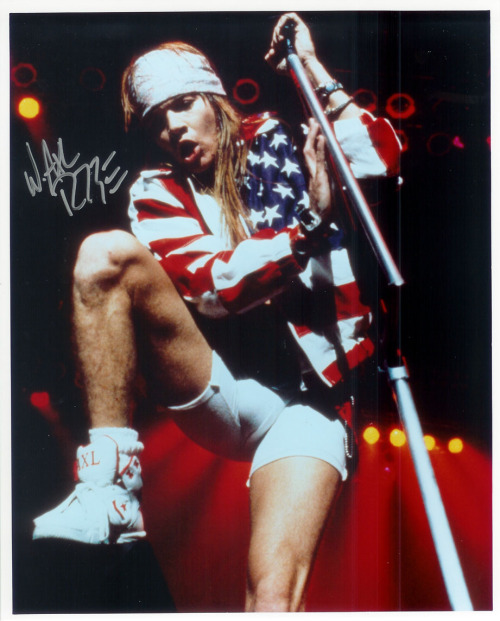
Not even his best jumpsuit.
Try not to stare at the bulge.

Seriously. Epic songs? "November Rain", "Estranged," "Rocket Queen", "Coma", "Paradise City". Crazy-good guitarist? Slash. (He's even got Brian May-esque HAIR!)

In the end, of course, Guns N Roses has a great musical range that stems from Rose's skill as a songwriter, but on the whole he doesn't have the ability to laugh at himself. (Axl DID cover a Charles Manson song and wrote lyrics like "You're daddy worked in porno / now that mommy's not around / she used to love her heroine / but now she's underground." But he's not gonna be caught dead singing "Bicycle Race," except maybe in the shower after a long night of coke and hookers. Even then, he'd probably deny it.)

Mötley Crüe has nothing on GNR, but GNR still pales in comparison to the tremendous breadth of Queen's skill and imagination and success and overall JOY.

Still, if you doubt my GnR comparison, you can't ignore this:


That's Elton John & Axl Rose singing "Bohemian Rhapsody". Maybe Axl CAN laugh at himself.

So, here's what we have: the world has moved on from true, bright, upbeat, optimistic, nearly endlessly fun rock music. For every Jet that appears, one dies.

Thursday, March 15, 2012

Springsteen, Women, and why artists are always looking in from outside


Here's a blog post responding to a blog post about a blog post. I love the internet!

Monica D'Antonio over at X Rated has an excellent essay about Bruce Springsteen's song presentations of men and women. Read it as well as the original article by Rebecca Bohanan ("The Only Three Women in Bruce Springsteen's Music"), which sparked Monica's analytical fury.

Then, because you have an hour of your life reading 3 articles about Bruce Springsteen, consider my additional thoughts here (with very inadequate summaries of Bohanan and D'Antonio):

Rebecca Bohanan acknowledges that Springsteen's a man and is thus entitled to write about men; but she accuses him of stereotyping females as saviors, objects, and/or goals. She cites lyrics (many of which are from 70s/early80s). She says she's a huge fan of his music, but that he's writing about a male type that's 50-60 outdated; and his women are barely present.

Monica's analysis (why didn't you read it, fool?) does an excellent job of citing lyrics to contend that Springsteen has plenty of male-female relationships that are about friendship; she also points out that the damaged men are often unhappy regardless of what the women do, which I'd like to expand upon a bit.

With music and poetry, people often fall into the trap of equating narrators with the authors. Some singers/poets invite that merging; others exploit that mistake.

I contend that Springsteen is not even writing from HIS perspective in most of his songs (especially once he achieves commercial success -- you think he's really knocking girls up, robbing banks, working at factories, etc after BORN IN THE USA?)

I reiterate, first, that the artist always views the world from the outside. Thus, they are from the world but disconnected. That disconnection comes before the artwork can flourish. The art is as much an escape as getting into a car and driving to a new town (and then writing songs about the old town). But there is a difference between the man who yearns of a chance to drive away from his burdens and sadness and the artist, who truly escapes but still suffers -- as the Marxists of the Harlem Renaissance learned, the working class doesn't have time to write stories and poems and songs about their own plight if they are working 12 hours a day. The artist is privileged in that they have opportunity to create, power to create, or the will to sacrifice time to create. This does not make the artist a better human being than a man or woman who works, raises kids, etc; this simply makes the artist an artist. The artist chooses the nontraditional path -- the chance to communicate something, but still suffer.

Remember: the artist is always outside looking in.

Springsteen, an artist writing from the outside of a world he knew first hand, is writing about a perspective that still exists, despite what Bohanan wants to admit. The alienated male stuck in ideas/communities does seem socially and politically 50-60 years out of date, but one cannot wish it away. It still exists. Nor can you fault the artist for shining light on it, unless they seem to be celebrating the suffering or championing the old ideas. Springsteen is not championing the class struggles of the men he sings about; at worst he's not writing songs about the class struggles of women. But is that really worth criticizing him for? (Consider: would he be able to satisfyingly represent the female perspective? maybe. Or, more interestingly, would Bohanan critique a singer who sings about the pain of racial divides? Even better, why isn't she critiquing Bruce for focusing on white men?)

According to Bohanan, these songs miss the opportunity to champion her ideology that men and women can achieve both happiness and equal power in relationships. I happen to agree with that ideology. But -- and this is what irritates me about her article -- not all men and women think that way! Springsteen is singing about the men that don't think that way; or, more accurately, he's singing about the men who are discovering that they don't think that way, but don't know how else to act!

Springsteen sings about these men and women and, while he champions their ability to survive, he never cheers the culture that allows their situations to exist! (As Monica points out, Springsteen doesn't seem to think their outdated/traditional perspectives will lead to any type of happiness.) It's a career-spanning critique: the struggle of men raised to accept traditional gender roles, struggling in near poverty (and worse). And maybe he's a Romantic, but Springsteen seems to think that Love (yes, with a capital L) still exists and can make the pain bearable.

It's here that I'm reminded of a quote from James Baldwin's story "Sonny's Blues," where the narrator confronts his brother Sonny about his (Sonny's) heroin addiction. They begin to talk about what's really important to them -- the nature of surviving in post-War Harlem when drugs and music offer a way out for guys like Sonny who cannot achieve middle class success/happiness.

"But there's no way NOT to suffer, is there Sonny?"
[...]
"No. There's no way not to suffer. But you try all kinds of ways to keep from drowning in it, to keep on top of it, and to make it seem--well, like you. Like you did something, all right, and now you're suffering for it. [...N]obody just takes it!"

Springsteen's men use love the same way Sonny uses jazz and heroin -- they still suffer, but they feel like they're doing something if they don't suffer alone. In the climax of James Baldwin's classic story, the narrator watches his sober brother play piano with 2 of his friends and the connection amongst the musicians is foreign (to the narrator) but beautiful. It's the thing that will keep Sonny alive, even if he suffers. Springsteen is talking about the same thing, as far as I'm concerned. Love, even if it can't cure suffering, makes suffering bearable. Love makes the working class man, who's brought up with the traditional male gender role of silent suffering provider, feel less alone.

Bohanan basically comes across as an elitist citing sexism when she misses that Springsteen is a class critic.

Does Springsteen focus on the way class destroys men more than women? Yes. Are there female artists who focus on the way class destroys women? Yes. Do we need one artist to do both? No. Bohanan would have done better to find the complimentary artist that highlights the struggle of working class women, instead of blaming Springsteen for doing something he clearly hasn't been trying to do!

Thursday, November 24, 2011

Ladies and Gentlemen, we are floating in space....

I spend too much time thinking about my music collection. I have over 13000 songs, some belonging to my wife (but not statistically significant enough to parse out the numbers here). It's 1100+ albums. It's 40 days of music. Not too bad, though I've certainly had more than that total -- some albums haven't made the long journey into my 30s. (Metal Church, I loved your screechy vocals and silly, Satanic lyrics, but I don't need you on my hard drive anymore. Though, I will look you up on Spotify and deal with the embarrassment of it posting to my Facebook wall later.)

One thing I've been thinking about recently is the way certain albums open. Not the opening songs per se (though I have a Spotify list of great opening songs that you're free to enjoy). I'm also not really talking about the opening chords or riffs.

No -- I've been thinking about great opening moments. The stuff that happens on some albums before the opening song itself starts. For instance, the gloomy-sounding woman's voice that declares "Ladies and gentlemen, we are floating in space" at the start of Spiritualized's nearly perfect album from -- eek! -- 1997. The hypnotic, pulsing, overlapping vocals and music of the title track that follows this quote bursts forth with the same monotony that colors the woman's voice. It's masterful and I think of that quote almost as often as I think of my favorite moments on the rest of the album. It's a fun thing to say, but would it be as fun lost in the middle of a song or between songs? Strange, that question, but compelling.

It seems like an out-of-touch, old-man type complaint that iPods ruined the album (something I think is only partially true), but the fact that I listened to most music on cassette tapes for the first few, key years of my music-loving life may have a lot to do with my interest in albums as cohesive experiences that sometimes kick off with standout, nearly non-music moments. CDs made skipping things easier, but it seems like I had already been programmed to start albums at their beginnings by the time I was financially capable of buying CDs and a portable CD player. In fact, portable CD listening emphasized the opening moments and tracks even more because the memory function on players didn't come along until later. (at least not at my price point.) Thus, I often heard the opening tracks of CDs more than other songs. On tapes that wasn't the case, but something else required me to start most of my tapes at the first sone on side 1 no matter what. (I did a bunch of rewinding and fast-forwarding in those days, a skill that translated to nothing else in my life, sadly.)

I guess this post could become one of two things, then: a minor rant about how music that isn't in a physical format lacks a sense of cohesion or just a call to appreciate and share those opening moments of albums that are not simply about the opening song, but of the first sounds one hears when embarking on a musical journey.


Dean Venture learning about the links between science geniuses and Prog-rock before he unwittingly falls into a Floyd-hole. 


Here are some great album-opening things (Are they moments? pulses? sounds? None of those seem right. Let's go with moments just cuz.) In no order:

Sepultura's classic album Chaos A.D. starts with a recording of the in-utero heartbeat of the drummer's son; the volume rises on the heartbeat like a little, fetal coronary is happening -- and then it is replaced (and almost matched) by the rapid, frantic drumming of the opening track, "Refuse/Resist." Not a bad way to exploit your kid.

Alice in Chains classic album Dirt -- about the fun of being a heroin addict (note the sarcasm there, kids) --  doesn't even have a lead-in pulse. The deceased Layne Staley shouts at us with his raspy, Texan "Ah!" -- there's no time to sink into this album, and yet as it progresses the songs excrete the kind of rusty, muddy, grimy feeling that you'd expect a junky to sing about. Those opening shouts can easily be of joy or the shock of being pricked with a needle. It works in terms of theme and energy.

Badly Drawn Boy's Mercury Prize-winning debut, The Hour of Bewilderbeast, begins with a lovely violin and horn piece that sets the mood for the album. It's about a minute and twenty seconds and then gets taken over by a slightly peppier guitar before the lead singer's semi-husky voice comes in. "The Shining" might be the greatest song Badly Drawn Boy will ever write. Which is both a compliment and a sad-but-true comment about how I feel about the rest of his output.

The Beastie Boys know the power of starting with something odd -- while Check Your Head has the mocking quote: "This next one... is the first song on our new album" to kick off the song "Jimmy James" it's the dog bark/howl that kicks off  Ill Communication that I tend to remember more often. Something about that canine noise shifting right into "Sure Shot" works too well to be something created by humans.

On When Your Heartstrings Break, the now-defunct Beulah start things with a coin dropping into a machine. I assume it's a jukebox because "Score from Augusta" has a beach-inspiried, pop-rock feel to it, though they probably deserved to earn a few more coins during their brief career.

Björk's excellent Post has that strange machanical-comet-descending-from-the-heavens to kick off "Army of Me." It leads right into a fuzzy-bass sounding riff that shouldn't go with her voice at all. And yet, Björk!

Pink Floyd's haunting, wind-howling "One of These Days" on Meddle cannot be described except to say that if you sync the song with the opening of Kubrick's horror classic The Shining, it's nearly better than the already awesome music Kubrick has in the movie. (Also, "Echoes" syncs with the last 25 minutes of the movie. Trippy Pink Floyd + hedge maze + snow + ax-wielding Jack Nicholson yelling "Dannnnnnyyyy!" = holy crap.)

System of a Down (to get back on the heavy metal tip) starts their album Toxicity off with a hard shot to the drums and then lets the anticipation boil over before kicking into the song proper. It's almost like the drummer accidentally started playing and then everyone else had to get ready; but that's the point.

Vision Thing by Sisters of Mercy has a weird metallic cough at the start, which I think matches the very treble-friendly mix of this otherwise awesome goth-after-dark rock album. "It's a small world and it smells bad." Yes it is and yes it does, Andrew Eldritch.


Anyone that knows me is simply waiting for a Radiohead comment, so here it is: The Bends. That opening was both awesome and maddening to me. As a metal-head transitioning into a wider scene of music (i.e., not heavy metal), I always found myself interested in 1 of 2 types of songs in the mornings before school. Either really fast, loud music or very slow ballads with awesome guitar solos (see: Pantera's "Mouth for War" for the former or Testament's "Return to Serenity" for the latter). But "Planet Telex" has this mysterious, etherial, computer-y sound that starts the album and, of course, hints at the greater sonic but still commercially friendly playing around the band would release on Ok Computer. When I think of opening moments on Radiohead albums, this one comes up first because I used to skip the song to get to the title track or "Just" because they were more immediately appealing. Eventually I would grow to love those opening noises and the song where Thom Yorke wails: "Everything is....broken. Everyone is....broken." Delicious melancholy replaces the rage of the metal head.

One of the other reasons I thought about this strange, seemingly pointless topic, is Pearl Jam's debut album, which opens (and closes) with a slow, squeeze-box fade-in of drums and ghost-guitar noises and Eddie Vedder moan-mumbling. Who doesn't love the jarring juxtaposing of the out-of-the-ether intro with the scratchy kick-off of Stone Gossard attacking guitar chords to kick the song off. Just as the band's singer seemingly came out of nowhere, the album comes out of the misty sounds of nowhere. Perfect.

Is this just weird to pay attention to this stuff? Probably. Let me know if you notice these things too!