Showing posts with label radiohead. Show all posts

Tuesday, August 11, 2015

Radiohead’s OK Computer

The great leap forward. Some people prefer The Bends; some OK Computer; some Kid A. But why the need to choose? “In an interstellar blaaaast, I am back to save the universe.” Are we meant to take this as a jubilant expression or one of cynicism? In fact, this album’s overall mood shifts between both and is not the gloomy, sour rock album it’s been portrayed as (though Yorke and the documentary Meeting People is Easy certainly didn’t help fight that image.)
From start to finish, OK Computer sounds unique, but let me be clear. It’s not post-rock; it’s not some advancement of music as a whole; it’s not the key to translating alien languages. Yet, it has an amazing cohesiveness, a pressure, a set of images, a perfect collection of sounds to go with the music. Truly, OK Computer is one of the best albums ever recorded. A band truly pushing themsevles be it with the cut-and-paste drums of “Airbag” or the ethereal guitarwork of “Subterranean Homesick Alien” or the crushing sounds of “Climbing up the Walls.” Of course, those aren’t even the first songs people think of when this album comes up in discussion.
“Paranoid Android” shares DNA with Queen and Pink Floyd and Rush and Led Zeppelin and yes every huge rock band that’s managed to crank out an epic mess of sound and angst that somehow sounds like it all fell out of the band in one jam session. Shifting tempos, shifting keys, the drawly vocals that are of “no consequence at allll” leading to the bright, uplifting “what’s thaaaaaat?” How does a song like this come into being? It’s a lot like creating a diamond, I think: pressure, heat, and time. If you meet someone who’s never heard a Radiohead song before, “Paranoid Android” might not be the best place to start. It’s like this: “You’ve never heard Pink Floyd? Let me play you this song called ‘Echoes….’ and then the entirety of Dark Side of the Moon.” You’ll smash their brains to bits!
Of course, where to begin with Radiohead is always a tough question and one that I can’t answer here easily. But this album has it’s collection of beautiful moments. Think about the crystalline beauty of the guitars on “Subterranean Homesick Alien.” It’s the sound stars make. It’s the injection of alienation, as if we haven’t felt gamma blasting from the album already. Makes sense that “Exit Music [for a film]” follows, since the song compresses the angst into a single point of heat, light and mass, only to let it explode “And nowwwww, we are oneeeeee, in everlasting peeacceee.” We don’t even need to care this is a Romeo & Juliet song, but it certainly helps remind us that Yorke & co. Aren’t soulless, love starved monsters hellbent on depressing the shit out of us. Sure they accomplish that, but what better way to capture Shakespeare’s than to have the lovers smashed into a single point by the end of the song?
Well there’s no time to ponder that, friends, because “Let Down,” one of the most miserably beautiful (or beautifully miserable?) songs just sticks its insect mandibles into our flesh and carries us away. Remember those guitar phrases from “Vegetable” and “Anyone Can Play Guitar”? This is the same kind of element, though here it’s more an arpeggio than a phrase that drives the song. (And confirmation that Johnny Greenwood and Ed O’Brien likely have long alien fingers.) This song is both one that takes off and crashes, fitting both the lyrical and musical imagery of the album. Ultimately we’re crushed like a bug on the ground, yes, but has it ever sounded so wonderful? I dare you to listen to this on a warm spring day. Somehow you’ll end up depressed about how elated you feel, mostly because of Selway’s drums which keep jostling you forward, yelling, “Stay upright! Clap your hands! Clap your damn hands!”
Sigh.
But this enforced jubilation (if that’s even what we should call it) dies right in the maw of “Karma Police” one of the classic Radiohead song constructions. Be calm, be calm, be calm -- NOW PANIC! LOSE YOURSELF! LET THE STATIC ELECTRICITY FLOW THROUGH YOU! 
Now listen to Thom Yorke futzing around with a text-to-speech program. I remember when I first heard this song, way way back, I had to laugh because I used the same program to make my computer say curse words. Yorke did something more profound with it, though I’m 100% sure (despite lack of evidence) he started out by typing in “bollocks” and “arsehole.”
Ok, “Electioneering.” If you are old and decrepit like me, you might know that the original version of this song had a slightly different composition (see 1996 La Cigale, Paris show). And if you spend any time in Radiohead forums, you will see “Electioneering” get jeered by fans who believe it’s not the right fit for the album. Well, that’s all fine. I don’t agree, but people need to have their say. Something about “Electioneering” reminds me of “Ignoreland” from R.E.M.’s acoustic masterpiece Automatic for the People. A politically-tinged song (in both cases) on an album of peaks and valleys. Alone they’re both solid tunes. On the album they certainly seem to stand out, but not because they are the best tunes. Still, “When I go forward, you go backward, and somewhere we shall meet” is a brilliant image, especially for Yorke’s sense of success-caused alienation. He’s said the song is less about politics but the nature of politicking the band was asked to do with labels and fans and managers and strangers. 
If you have quality headphones this entire album shines, but none more brilliantly than “Climbing up the Walls,” wherein Yorke gives voice to insane spirits. The ping that pierces on the right speaker, the trembling sounds beneath the ping -- is that a bass string? A wavering piece of wood recorded and put through Pro Tools? Enjoy the rattle and clomp and the guitar mimicking Yorke’s voice (though a line later than his vocal melody). Listen to the synth before the manipulated strings tear at the left speaker. If Yorke ever wants to blow out his voice, he’ll do it with the climax of this song, the moment where he seems to be channeling Kurt Cobain, of all people, with that last ragged, haunting yawp of “Climing up the Waalllllllls yaaaaaaaaaaaa!”
How does an album keep going after that? It can’t go much further and this is where some debates about the length of this album come into play. Sure the clean, bright arpeggio of “No Surprises” might be the only thing to override the grit and doom of “Climbing” but can an album keep forcing us to turn inside out, revealing our frazzled nerves to the world as Yorke moans about numbness and the suburban nightmare of “a quiet life” and a “handshake of carbon monoxide.” It’s a good question. How much more can we take? We have to take more, though, and while “No Surprises” has the same kind of emotional launch that “Let Down” previously offered, there’s the sense that this is less a reprise and more being caught in the same musical ideas. 
Don’t misunderstand me, this album offers me nothing bad. I hate no stitch of it. I lament no decision. I do not question the tracklisting, the length, the interconnected nature of the lyrics and music. But if this album feels too long to even a vocal minorty (and yes, it does feel long to enough people that I’m ranting here) then this is the reason “Electioneering” gets picked on even though “No Surprises,” “Lucky,” and “The Tourist” melt together into the end of the album and perhaps are the true areas to trim.
Seriously, though, doesn’t the album need “Lucky”? This profound inversion of depression and exuberance? Remember how “Airbag” warned everyone Yorke was back to save the universe? Here he’s feeling a tad less plucky, despite refusing to meet with “the head of state” because he “don’t have time for him.” While “it’s gonna be a glorious day” the fact that his “luck could change” reveals that the day is not glorious by default. Someone else needs to put him out of the aircrash and the lake. “I’m your superhero” but who saves a superhero? Where has that invicible feeling gone? 
This thematic issue is the very reason the album needs to end with “The Tourist.” The slowing down of everything (“The Tourist” moves with a limp, especially when compared to these other closing songs the band’s recorded: “Blow Out,” “Street Spirit,” “Life in a Glass House,” and “Wolf at the Door”). “The Tourist” folds the album around, bringing us round to “Airbag” (because, “Hey man, slow down” that car). More importantly though is the urge for us to slow down. The inspiration for the song was, supposedly, the band seeing a tourist family rushing around Paris. They were seeing things but not enjoying things. In the world of OK Computer, time is out of our control. We’re crushed or in bottles (“Let Down”) we’re suffocated (“No Surprises”) no one believes us (“Subterranean…”) we’re in a plane crash, climbing up the walls, and tied to a stick. We’re one in everlasting peace, true, 

The imagery of imprisonment threads throughout. How do you end an album with such oppressive feelings to remind the listener that there’s some glimmer of hope? You tell them to slow down. So: slow down. 

Thursday, July 30, 2015

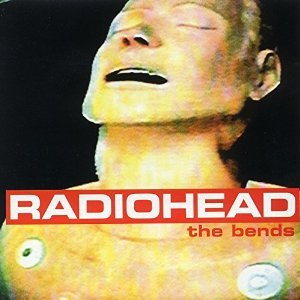
Radiohead Appreciation Post: The Bends

“You can force it but it will not come.” Dear god this album’s sweet perfections. It’s the thing that convinced me Radiohead were making music I’d never heard before but would listen to a million times without feeling drudgery. Listen to the drums and the nearly demonic, menacing synth noise that crashes during the first chorus. “Everyone is...broken.” Yes. Yes. Add on the original title Planet Xerox and you feel how this album begins without any sense of positivity. There’s no chance of “Anyone Can Play Guitar”s Romantic view of Rock. This album was spawned by “Blow Out” and the cynicism of “Inside My Head” (as I said in my post on Pablo Honey: track it down, dammnit!) 

image
Yorke’s lyrics take a huge leap in complexity, avoiding rock cliches and reminding we feeble Americans that there’s a fine line between opaque lyricism and outright gibberish (see: 90s grunge and post-grunge nonsense lyrics). Do I wish some of the lyrics made a bit more sense? Not on The Bends. (Ok, maybe “Sulk” could be a bit less obtuse -- it’s about a serial killer, according to Yorke.) 
The Bends really captures a sense of paranoia and a shifting earth. Does Yorke trust anyone? Even his bandmates? Well, dig through the countless interviews and figure it out. Regardless of the personal demonology, the album does its best to capture the rush towards the age of over-sharing and under-trusting via the still nascent online world (this is the age of CompuServe and Prodigy and AOL). 
“We don’t have any real friends!” Yorke declares on the title track, the band’s first draft of a “Paranoid Android” kind of epic. Hear the imagery, absorb the shifts in rhythm and energy. “I wanna live, / breathe, / I wanna be a part of the human race!” Have you ever played the riff that follows that line? It’s neat, like the perfect leap of a little spider. The whole song crashes down.
But the idea of leaping reappears in the silly little pop song “High and Dry.” Here’s song that often leaves the daredevil suspended, despite the threats of injury that Yorke’s obsessed with in this period (see: “Bones” & “High and Dry” b-sides: “Killer Cars” & “Stupid Car.” Nevermind the imagery of “My Iron Lung”). The simple solo, the verse-chorus-verse setup. It’s not surprising Yorke seemed to despise this song, often introducing it as meaningless and “just a pop song.” In fact, they only played it a total of 81 times between 1994-7. (Perspective: they played “Creep” 129 times and the single “Just” 142 times in that same timeframe. Info from www.58hours.com).

image
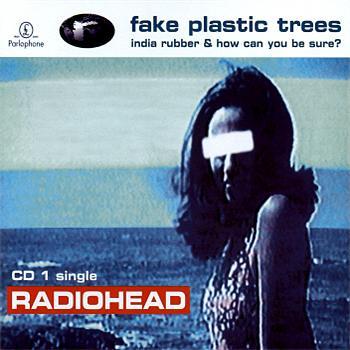
Anyway, who cares about “High and Dry,” right? This album is all about two tracks: “Fake Plastic Trees” and “Street Spirit [Fade Out].” Right? Well, yes if you’re not old enough to know Radiohead as something other than the publicity shy, MTV-avoiding, press-hating band that they’d become post OK Computer. But this album offers such amazing moments, from “Bones” spiking vocals and gritty guitar along with “I used to fly like Peter Pan! / All the children flew when they touched my hands!”
But still, there’s more and more here. Yes, I extolled the virtues of Pablo Honey, but The Bends is near perfection in terms of pacing both on a song-level and in tracklisting. “Nice Dream” feels like floating on the ocean, watery, soft feeling after the crunch of “Bones.” “Nice Dream” then leads into the upfront guitar mastery of “Just,” one of the band’s most complicated early songs (There’s a thousand chords crammed in there.)
Then, “My Iron Lung,” one of the best songs to hear live. Drink in that metallic, twisty riff that sounds like robot cancer—yes, robot cancer.“The brain / says I’m re-ceiv-ing pain, / a lack of ox-y-gen, / from our li-fe support.” What fresh hell did Yorke experience in his life to obsess about pain and death so much? Oh, just a bunch of hospital visits for his eye when he was a little kid. Just a summer of working at a mental hospital (which would inspire “Climbing Up the Walls.”) Couple of car accidents. I mean, what else do you want from the guy, sunshine? Drinking songs? Leave that shit to Oasis. Radiohead makes the stuff that sounds like art compressed into neat packages. “When the power runs out / we’ll just hum.” Hum what? Pop songs.
But oh, before I hear the wrath of thousands arguing that Radiohead isn’t a pop song writing band, that the albums supersede the beauty of the tracks, before that happens we hear: the soft throb of “Bullet Proof.” What a chilling song featuring Johnny Greenwood’s nearly liquid arpeggios and Yorke’s gentle, haunting prolonged “proooooooof.” And oh the guitar work and the sound of a solemn wind behind it all—it’s perfection. Like a song captured in sap, eventually becoming fossilized. Track down some live versions to hear Johnny Greenwood get all sound-nerdy. (1995 Paris Cafe de la Danse, for one; 1995 Stockholm FM recording for a better sounding one).
We need to fade out, again, though. The pressures and paranoia of the album all get soothed by the tap-tap-tap of the drums and the driving arpeggio of “Street Spirit.” Simple backing keyboards, Yorke’s best vocal performance out of the first two albums, and lyric imagery that still outshines some of their later work. “[tap tap tap] Cracked eggs, / dead birds, / scream as they fight for life; I can feel death, can see its beady eyes.” I always felt like the video for “Just” should’ve been used for this song as it seems like there’s something secret here that is just past knowable. Then again, the original is fantastic too. 

Sunday, July 5, 2015

Radiohead appreciation post: Pablo Honey (1993)

[Note that links to the album and individual songs are to the Spotify Web Player, which will require you to login to listen. Was the easiest way to link to audio without legal issues.]

Oh, Pablo Honey. It all starts so delicately with the trilling and the swaying rhythm and then the polished distortion before “You…are…the sun and moon and sky are you….” Already, Radiohead’s career long interest in the moon is in our face, but the crucial thing with “You” is that it showcases one of Pablo Honey’s great strengths—the constant, successful shifts between soft and loud. The energy doesn’t even have to change—the soft sections of “You” and “Stop Whispering”—maintain a bouncing element. Don’t you wonder what “Exit Music” on OK Computer would sound like if given the same treatment (not as a replacement, of course, but as an alternate take)?
Who made this silly cover? Where’s Stanley Donwood?!
 Of course, the infamous, beautiful, career-launching “Creep” is the model for many Radiohead songs offering the soft, loud, soft, loud, louder, loudest build-up, which “Karma Police” and other tracks offer in slightly modified forms. Is “Creep” deserving of twenty-plus years of fan-lust, the kind of song that old fans secretly dream will appear on setlists between more the mature songwriting of “Lotus Flower” or “A Wolf at the Door”? Yes. Yes it does. It’s the perfect song of self-loathing, delivered by Yorke’s authentic misery and aided by the chu-CHUNK of the guitar (the noise of which the band admitted was an attempt to sabotage the song during a performance and essentially became the key element. The most fitting sound for a beautiful song about feeling ugly.)

The album’s not without its weaknesses, though, and “How Do You?” is certainly lacking in many areas, particularly lyrical prowess. Now, fans of 21st century Radiohead might scoff and suggest that Pablo Honey doesn’t have much in the way of compelling songwriting, but I suggest people who believe that are bastards. While I agree that “Thinking About You” offers a vanilla verse-chorus-verse structure only made interesting by its frank talk of masturbation while “Ripcord” and “Prove Yourself” do little to break out of basic rock song presentation, there’s much magic to be found in Johnny Greenwood’s guitar work on “Stop Whispering” and “Vegetable” nevermind the nearly-fit-for-The-Bends closer “Blow Out.” Seriously, listen to the whirlwind of guitar noise at the end of “Stop Whispering” or the near-march pounding of “Anyone Can Play Guitar” which, in addition to its uncharacteristically positive lyrical content seems to let the bass drive the rhythm while the distorted guitar drapes over the bass line like wet sheets. When this song starts it suggests a fast-pace as the noise swirl approaches, then the drums kick in, cutting through to set the pace. Perhaps Yorke seems too earnest when he sings about getting to Heaven or yearning to be like Jim Morrison.

But I’m going to set this song up as evidence that the dancing Yorke of the “Lotus Flower” video has always been inside this enigmatic lead singer; it’s just tough to stay positive, you know? Listen to the solo around 2:30 (it’s buried a bit far in the mix, yes, but who can blame the band for that?). Listen to the song fade out, like the tide receding. You still think the album lacks some kind of uniqueness? Something worth returning to? Then listen to the guitar on “Vegetable”—it’s not dependent on chords at all, just a beautiful little string of notes whose repetition barely stands out. It neatly mimics the vocals, adds trills here and there, then dives into a puddle of tidy distortion that gives the song a late-afternoon-in-the-late-summer feeling. And you can’t deny hearing Yorke sing “I’m not a vegetable! I will not destroy myself!” isn’t thrilling. Especially because he doesn’t give that great moment away until the latter part of the song.

Doesn’t this feel more like a Radiohead cover?
At least it’s more in line with The Bends and OK Computer...

This whole album has moments that are not basic chorus moments. It’s not the solos alone that stand out. It’s all about the construction. Listen to the difference in distortion on the solo in “Vegetable” versus the initial, cleaner sound. Listen to how Johnny and Ed O’Brien swirl the sounds around. “I Can’t” has a falsetto-teasing Yorke sing about the doubt of young love. (Or lust, hard to know the difference.) But something about the opening guitar riff, which the chorus and echo (maybe some flange?) has an amazing quality. The song almost doesn’t fit on the album. Yorke’s voice is restrained; the palm-mute-happy guitar; the repetitive chorus—it sounds like a lesser band’s best song. “Even though I try, I can’t.” Yes, yes. Do I need to even mention that the word ‘lurgee’ is a 50s radio show term for an illness? A slow song that relies on guitar-work similar to “Vegetable” and showcases Yorke’s obsession with health issues but also a sense of humor.

Finally, Yorke’s proclaimed favorite song (at least for a while). “Blow Out” has a minimal chorus that leads into noise, pure noise, the kind of composition of sound that would pave the way for the opening track on The Bends and suggests other songs like “Paranoid Android” and “The National Anthem”. But, staying in the moment, listen to that late night sound—the cymbals, the jazzy chords, and the high-pitched PINNNGGGGGG. Where does this song come from in the band’s short history? I think it’s the song that opened up a path in their mind. I think it’s the last song on Pablo Honey because it points the way forward. Sure there’s the chaos and noise of “Anyone Can Play Guitar” and non-album track “Inside My Head” (worth tracking down as it’s more brilliant than half of Pablo Honey). But “Blow Out” is a layered masterpiece that may not sound as great as later songs, but it showcases each band member distinctly. Selway’s drums drive towards the release of the final metallic-tunnel sound of the closing solo. It comes crashing down and I suggest you go right into The Bends opening track “Planet Telex”, because it’s meant to be that way. How could it not be?

Tuesday, February 5, 2013

On Radiohead's Water Obsession

People who know me, know I'm a bit of a Radiohead fan. In fact, the top hits for a Google search of my name once were song lyric interpretations on Radiohead sites.
I'm not embarrassed, though I am glad newer things have taken the top spot.
WATER! © Evan Roskos 2012

One of the great things about following Radiohead for so long is the magic of becoming familiar with lead singer Thom Yorke's various obsessions. My favorite is his constant anxiety about water, which now far surpasses his once famous obsession with car accidents.
Seriously, Yorke sees water hazards all over the place. If he's not asking us to "pull him out of the lake," he's going to "jump into river" or "jump off the end / into a clear lake" after he's "lost at sea" and "floats down the Liffey" or warns us that "The waters break, the waters run all over [him]", which isn't surprising since if he's not "in the deepest ocean / at the bottom of the sea" worried about a "house falling into the sea" or how "the sea would / electrocute us all" or especially about how "the rain drops" (even though he asked for it to "rain down on [him]"), then he's "standing on a beach with [his] guitar" "while the ocean blooms" wishing someone would "build an ark" because, aside from all menacing water, there's an "iceage coming."
Okay, that last one's a stretch, but you get the point.

[Songs quoted: Lucky, Pyramid Song, Codex, In Limbo, How to Disappear Completely, Vegetable, Weird Fishes/Arpeggi, Where I End and You Begin, Nice Dream, Sit Down. Stand Up., Paranoid Android, Anyone Can Play Guitar, Bloom, Sail to the Moon, Idioteque]